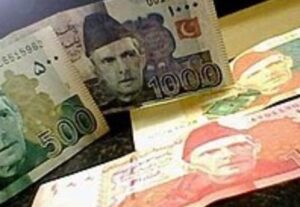
Common man hit by increase in drug prices

By Shahid Rizvi
The government has announced recently that pharmaceutical companies have been allowed to increase the prices of medicines by 7.5 percent.
The three points are worth noting. Firstly, it is the first increase after January 1994 as compared to the last six months of 1993 when every month more aptly every delivery of medicines by the manufacturers was on increased prices. Secondly, the increase as allowed is only 7.5 percent, against the practice of increasing at 20 to 30 percent. And, thirdly, the government has intervened and stopped pharmaceutical companies to arbitrarily increasing the prices.
However, what is lacking is the justification for allowing a price hike. It is better if the government could give the reason for allowing this increase as everyone knows that exorbitant profits are being earned by medicine companies.
It is also very doubtful that the pharmaceuticals will remain within the limit of 7.5 percent. The increase will be much higher. The government should be vigilant on the point also.
Everyone desires that the prices of consumer goods should be brought down to a level where at least sufficient quantities of the commodities are within reach of the common man. This thinking reflects our ignorance of the laws of the market. Under the present system of production and marketing, it is simply a utopia. There is no such mechanism to reduce the prices.
Reason for the hike
The rise in prices is due to hundreds of factors. A market economy is set primarily on two factors – production cost and demand in the market. The prices in the market adjust to these factors.
Another way of raising prices is at the will of the manufacturer, trader, retailer which need not specify any reason. A thousand excuses are presented which are very annoying but the buyer is helpless – either you buy or not.
The prices are increased at manufacturing, wholesale, and retailer levels. The retailers are at the lowest ebb and have to bear the brunt of abuse hurled against price rises by the public. The manufacturers raise the prices due to the rise in the cost of raw materials, transportation, processing, labor costs, selling costs, and increases in government duties and taxes. Since there is no check on the ratio of increase in prices and manufacturing cost, the will of the manufacturer rules, supreme.
There is no check at all which can justify the price rise. The prices of medicines during last year are a glaring example. During the last 6 months of 1993 every pharmaceutical company, most of them multinationals, raised the prices of their products by 20-30 percent every month with a cumulative effect of 700 percent at the end of the year.
The Benazir government intervened and only then was this practice stopped, that too for only six months. No one on earth can give a plausible justification for this 700 percent and the sudden stoppage at the intervention of the government except that the basic aim of the companies was to maximize their profits at the expense of the people. The prices are still at the same level.
This means of profiteering only benefits an individual or a group and is very harmful to national development. The malpractice allows for the huge sums of money in the hands of few entrepreneurs. In the long run, money becomes short in the market and is not available for development purposes.
Normally, the rise in the prices of commodities and services is the law of the market economy. There is a circle of cause and effect where one effect is the cause of the other effect.
Recently our press discussed the agreements made with American firms by the government and other private parties for generation of energy. There were objections that the power we would get through these agreements, made with American firms by the government and other private parties for generation of energy will be much costlier.
We have examples of many other projects of national importance, which were planned as a low investment but there were subsequently raised many times Pakistan Steel was built at a very high cost but not with the latest technology. Yet it is a prestigious complex for Pakistan. The prices of machinery and equipment at the international level are going up steadily and if we want them we have to pay for them.
Who can deny the importance of and necessity of cancer treatment machinery for our hospitals, which cost millions of dollars? It would definitely be a burden on our budget and the people, but there is no choice.
What we must realize is that we cannot turn the wheel back in the case of ever-escalating prices. It is our genuine desire, more exactly our right, to live a respectable life i.e. having sufficient means to make both ends meet comfortably. We will have to seek for remedies within our means and keep options for our requirements.
Development is a continuous process and so is the price rise. It is however expected that with the use of high-speed machinery, automation, and robotization the ratio of production will rise and the graph of required labor will come down, making the commodities cheaper and easily accessible.
The only way open to us is to increase the productive forces so that more money is generated, more products are made and more wealth is distributed equally.